

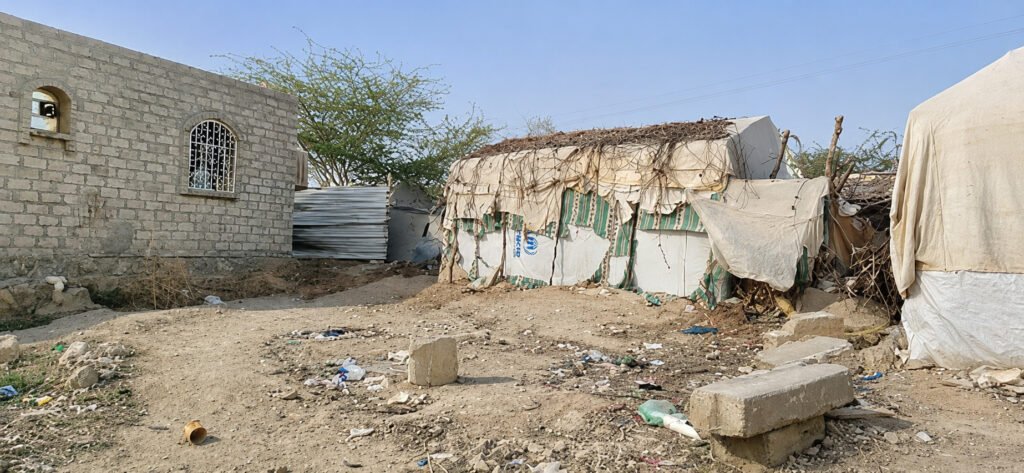
For many people, Yemen is a distant country known only through headlines about a conflict that has lasted more than a decade. Yet behind those headlines lies the daily reality of millions of families whose lives have been transformed by war. Since the escalation of the conflict in 2015, approximately 4.8 million Yemenis have been internally displaced, forced to flee their homes in search of safety, education, healthcare, and the basic necessities of life. For them, displacement is not a temporary interruption, but an uncertain existence marked by loss, hardship, and resilience.
Just outside the city of Seiyun, in the Hadhramaut Valley, lies Maryamah Displaced Camp, home to approximately 4,900 displaced households. Many of its residents fled violence in governorates such as Hajjah, Al Hudaydah, and Al Jawf. While the camp has provided refuge from the conflict, it has also become the setting for a new struggle: rebuilding life with very limited resources Families live in makeshift tents that offer little protection from the intense summer heat, where temperatures often reach 44°C (111°F). During the rainy season, flash floods sweep through the camp, destroying food, bedding, and personal belongings while leaving behind stagnant water that increases the risk of disease. Electricity is unavailable, and access to clean water, sanitation, and healthcare remains extremely limited
Women and girls carry some of the greatest burdens of displacement. Living in overcrowded tents leaves them with little privacy or security. Economic hardship forces many families to prioritize survival over education, causing children to leave school. Older girls often face additional barriers, including limited places in nearby public schools and significant gaps in their education after years of displacement. Many mothers, who never had the opportunity to learn to read and write themselves, struggle not only to support their families but also to help their children continue learning.
Yet even under these circumstances, hope persists.
Inside a modest tent in Maryamah, a displaced teacher named Saadia has created a small classroom where more than 100 girls, mothers, and elderly women gather to learn reading, writing, and basic mathematics. Though simple, this classroom represents far more than education. It offers confidence, dignity, and the belief that a different future is still possible. Inspired by this resilience, Masarat Foundation is committed to supporting the women and girls of Maryamah through its Literacy & Skills Program, which combines literacy education with vocational training. Recently, 26 women graduated from a course that taught them basic reading and writing alongside practical skills in incense and perfume making. These new skills provide opportunities to generate income, strengthen household resilience, and build greater independence.
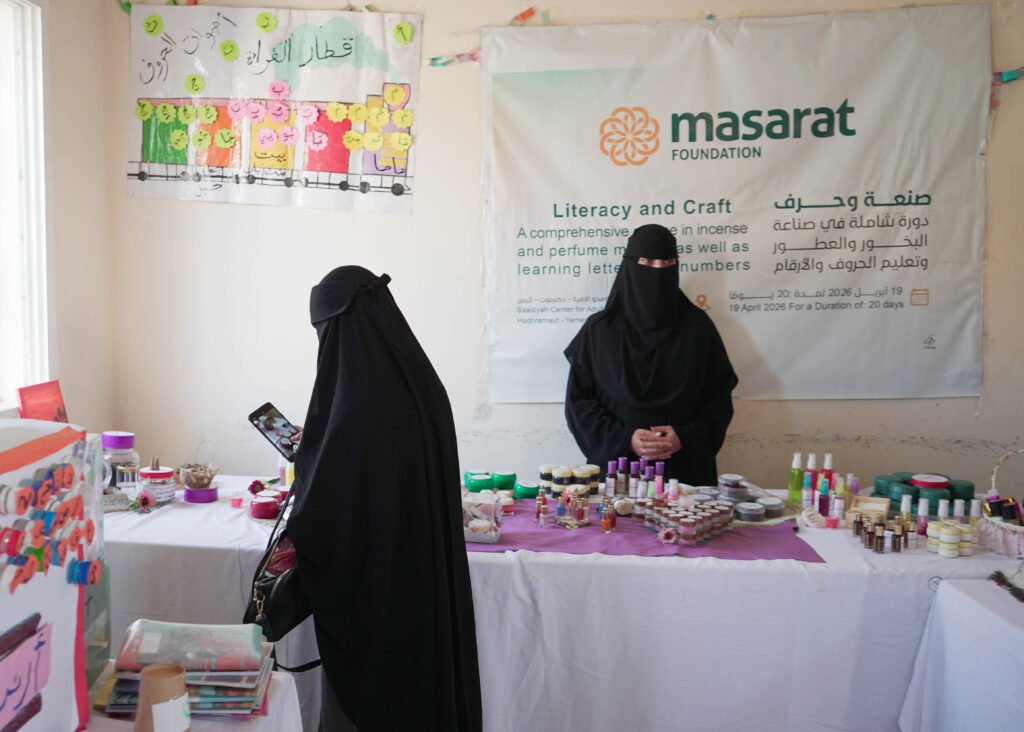
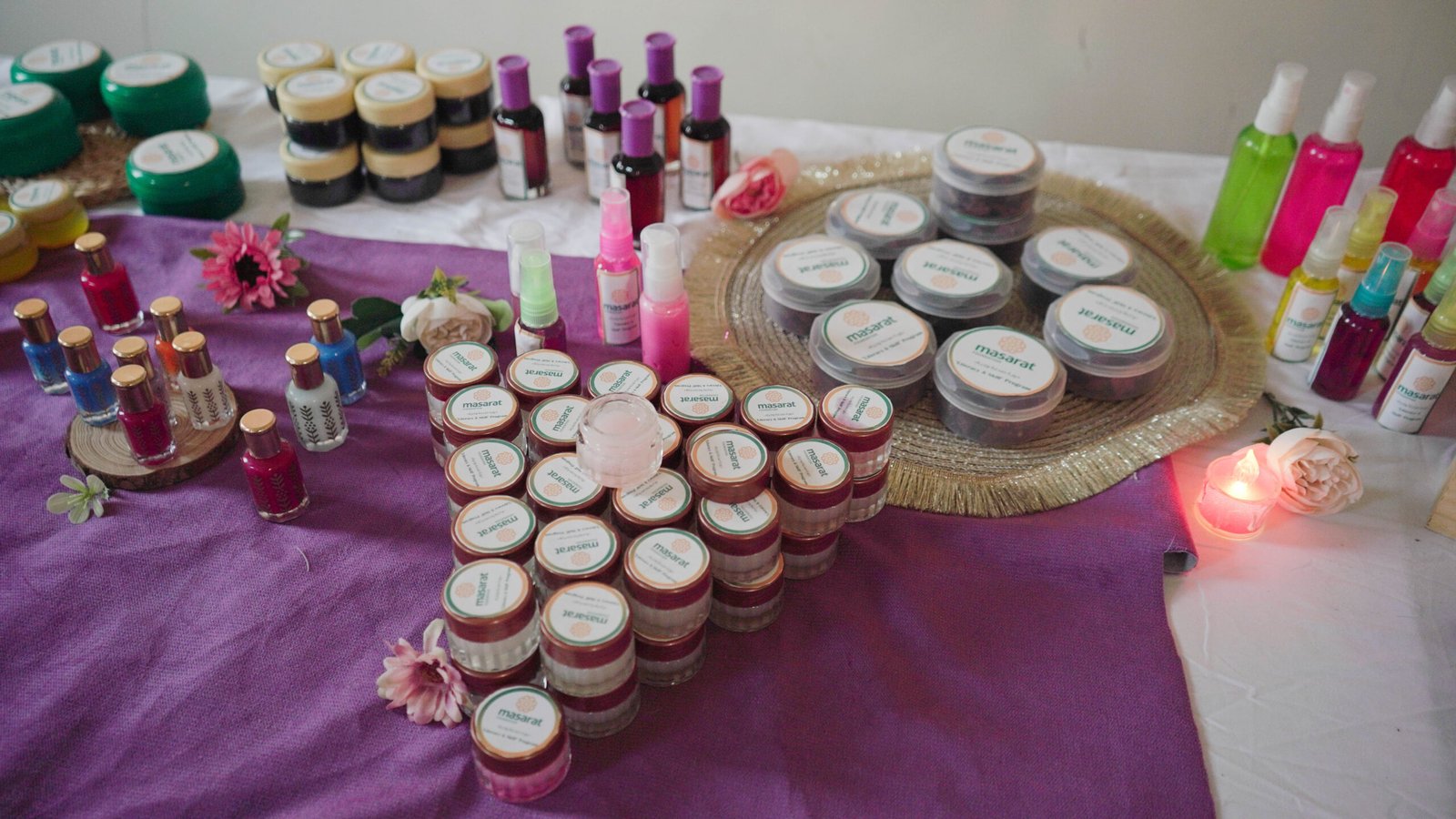
Students of Masarat Foundation’s Literacy & Skills Program display and sell the incense and perfume products they created during their vocational training, transforming new skills into opportunities for making a livelihood. Photo: Abdullah Al-Saqqaf
Supporting the women and girls of Maryamah is about much more than meeting immediate humanitarian needs. It is an investment in education, opportunity, and human dignity. Every woman who learns to read, every girl who returns to school, and every mother who gains the skills to support her family represents another step toward rebuilding lives that conflict has disrupted.
In a camp where daily life is defined by uncertainty, the girls and women of Maryamah are laying the foundations for a better future for themselves, their families, and their communities.